Dell 3.2TB Data Center NVMe Gen5 MU TLC E3.S SSD PM9D5a (TYRVN)
- Sale Price: $4,599
- $7,999
Unsure of your model or have a large order?
- Free 1-Year Warranty
- 100% Dell Original Components
- 30-Day Money-Back Guarantee
- Dell Certified Technicians & Engineers



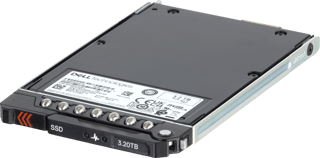
- Part Condition:Recertified
- Capacity:3.2TB
- Drive Size:E3.S
- Interface:NVMe
- Interface Speed:32GT/s
- Drive Type:Mix Use
- NAND Flash Memory:TLC
- PCI Support:PCIe Gen 5.0
- Encryption Capability:None
Part Number
- TYRVN
- 345-BKFP
- 345-BKJZ
- MZ3L63T2HFLT-00AD3
Compatible with
Features
Recertified - Part Condition
xByte offers like‑new quality with minimal prior use. These drives have low operational hours and 97-100% remaining endurance, ensuring long‑term reliability.
Each component undergoes comprehensive testing to verify performance, functionality, and overall condition, delivering the same level of trust customers expect from new hardware at a more competitive price point.
This hardware is backed by Dell's OEM warranty with the ability to uplift under your current configuration warranty. Customers can buy with confidence in the quality and support provided.
Mix Use - Drive Type
Designed for applications with a balanced combination of read and write activity, typically offering endurance greater than 1 and less than 10 Drive Writes Per Day (DWPD).
These Dell SSDs are well suited for workloads such as virtualization, databases, and other applications requiring a balance of performance and write endurance.
TLC - NAND Flash Memory
Enterprise triple‑level cell NAND stores three bits per cell and is optimized specifically for enterprise SSD applications.
It combines higher storage density with enterprise‑level endurance, reliability, and performance, making these SSDs suitable for a broad range of Dell server and storage workloads.
PCIe Gen 5.0 - PCI Support
This interface provides 32 GT/s per lane and approximately 15.75 GB/s of theoretical bandwidth over an x4 connection. These NVMe SSDs offer twice the bandwidth of Gen 4, supporting high‑performance Dell infrastructure and data‑intensive workloads.